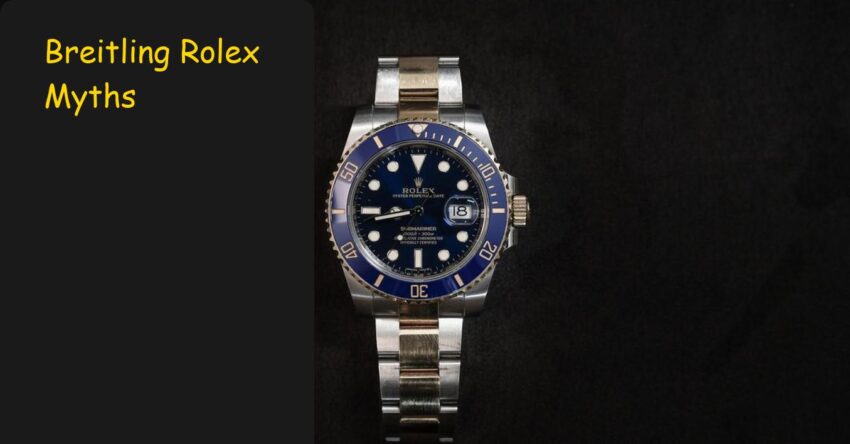
Introduction: The Intricacies of Luxury Watch Conglomerates
When you think about luxury watches, names like Rolex, Omega, and Breitling come to mind. But do you know who actually owns them? The luxury watch market is dominated by massive groups like Swatch, Richemont, and LVMH. These conglomerates control dozens of brands across every price level. Yet many consumers assume that every famous watchmaker sits under one of these corporate umbrellas. That assumption is often wrong.
The confusion is real. A 2022 survey from WatchPro revealed that one in three luxury watch buyers incorrectly believed Breitling was owned by either Rolex or the Swatch Group. That is a staggering level of misunderstanding in a market where ownership directly affects pricing, service, and resale value.
This article sets the record straight. We will answer the question “is Breitling owned by Rolex Group?” once and for all. You will learn exactly who owns Breitling today and what the Rolex Group actually consists of. We will also map the broader landscape of luxury watch conglomerates so you can make smarter buying decisions. Understanding watch brand ownership helps you evaluate heritage, value, and long-term investment potential. Let us start by tackling the biggest myth head-on.
The Core Answer: Breitling’s Ownership Journey
Let’s address the question head-on. Breitling is not owned by the Rolex Group. There is no corporate connection between these two Swiss watchmakers. They operate as completely separate entities with different ownership structures.
Since 2017, Breitling has been owned by CVC Capital Partners, a global private equity firm. CVC acquired the brand for approximately €870 million. This acquisition moved Breitling from family ownership into the private equity space. Under CVC, the brand has undergone a major transformation with professional management and a sharper product focus.
So why do so many people ask, “Is Breitling owned by Rolex Group?” The confusion is understandable. Both brands share a strong Swiss heritage. They often appear side by side in the same retail windows. Their price points also overlap, especially when comparing entry-level Rolex models with higher-end Breitling pieces. These similarities, along with the widespread belief that most luxury watch brands belong to a few big conglomerates, fuel the misconception. For a deeper look at how these brands compare on prestige and value, check out our breakdown of Breitling vs Rolex.
To understand how Breitling arrived at its current ownership structure, we need to look back at its history. The brand’s journey from a family workshop to a private equity-backed powerhouse is worth exploring.
A Brief History of Breitling Ownership
To understand why people ask “is Breitling owned by Rolex group?”, you need to look at the brand’s past. Breitling has changed hands multiple times over nearly 140 years. Each era shaped the company in distinct ways.
Founding and the Breitling Family Era (1884–1979)
Léon Breitling founded the company in 1884 in Saint-Imier, Switzerland. The brand quickly specialised in chronographs and cockpit instruments. According to Breitling’s heritage archives, the family ran the business for nearly a century. They built a strong reputation for precision timekeeping and aviation reliability.
By the 1930s, pilots trusted Breitling for both onboard instruments and wrist chronographs. This aviation DNA remains central to the brand’s identity today. If you are comparing Breitling to Rolex, understanding this heritage matters. Our detailed guide on whether Breitling watches are as good as Rolex in prestige explores these differences further.
The Schneider Family Era (1979–2017)
The Quartz Crisis of the 1970s devastated many Swiss watchmakers. Mechanical watch sales plummeted across the industry. In 1979, Ernest Schneider stepped in and acquired Breitling. As noted by Hodinkee in 2021, this purchase saved the brand from likely collapse.
The Schneider family worked hard to stabilise the company. They revived the iconic Navitimer and restored its focus on aviation watches. But by the mid-2010s, the brand faced fresh challenges. WatchTime reported in 2018 that market saturation had set in. Breitling’s product line had also grown too broad, with over 100 different references confusing customers.
This struggle paved the way for the brand’s next chapter. The Schneider family eventually sold Breitling to private equity firm CVC Capital Partners in 2017. That transition brought a complete strategic overhaul, which we cover in the next section.
Current Era: CVC Capital Partners (2017–Present)
In April 2017, CVC Capital Partners acquired Breitling for approximately €870 million, according to a [Reuters, 2017] report. This marked a major shift for the brand. Private equity brought new financial resources and a fresh strategic direction.
CVC appointed Georges Kern as CEO shortly after the acquisition. Kern, formerly the head of IWC Schaffhausen, had a strong track record in luxury watch management. He quickly redefined Breitling’s identity with a “modern retro” aesthetic. The product line was slashed from roughly 150 models down to about 20 core references, as detailed by the [Financial Times, 2022] and [Business of Fashion, 2019]. This focused approach made the brand easier to understand for buyers and more efficient to produce.
Private equity ownership brought professional management discipline to Breitling. Tighter control over supply and distribution helped stabilize the brand’s market position. As a result, Breitling’s resale values have improved noticeably. For buyers wondering “is Breitling owned by Rolex group?” the answer remains no, but CVC’s backing has given the brand a competitive edge similar to what luxury watch conglomerates offer their portfolio brands.
This ownership structure differs sharply from the foundation model used by Rolex. Understanding these differences helps buyers evaluate how ownership impacts everything from design choices to long-term value.

Unpacking the Rolex Group: Key Characteristics
To understand why Breitling is not part of the Rolex Group, you first need to know what the Rolex Group actually is. The answer may surprise you.
Rolex is not part of any conglomerate. It operates as an independent company owned by the Hans Wilsdorf Foundation, a Swiss non-profit trust. This structure is rare in the luxury watch industry. No outside shareholders or corporate boards influence the brand’s long-term decisions.
The group rests on two main pillars. The first is Rolex S.A., the flagship brand. According to a Bloomberg report from 2020, Rolex generates over $9 billion in annual revenue. The second pillar is Tudor S.A., a wholly owned subsidiary. Hans Wilsdorf founded Tudor in 1926 to offer Rolex-level reliability at a more accessible price, as noted on Tudor’s official website.
The foundation model is key to understanding Rolex’s independence. The Hans Wilsdorf Foundation owns all of the company’s shares. Profits are either reinvested into the business or donated to philanthropic causes. According to Rolex’s official website, this structure insulates both Rolex and Tudor from short-term stock-market pressures. That freedom allows the brands to focus on quality and heritage rather than quarterly earnings.
This unique ownership model helps explain a common misconception. Because Rolex and Breitling share Swiss roots, premium pricing, and similar retail environments, many buyers assume a corporate link. If you are curious about how the two brands compare in terms of prestige and value, our article on whether Breitling watches are as good as Rolex in prestige explores that question in detail.
Next, we will break down exactly why consumers confuse Breitling with Rolex — and what drives that persistent myth.

Why Consumers Confuse Breitling with Rolex
Despite Breitling being fully independent under CVC Capital Partners, the confusion with Rolex is surprisingly common. A 2022 study by WatchPro found that one in three luxury watch buyers mistakenly believed Breitling was owned by either Rolex or the Swatch Group. Let us break down why this happens.
Shared retail environments play a big role in this misunderstanding. Many authorised dealers stock Breitling watches right next to Rolex and Tudor models. When shoppers see these brands displayed side by side, they naturally assume a corporate link exists. This visual pairing, repeated across hundreds of storefronts, creates a strong but incorrect mental association.
The “Swiss Made” halo effect further blurs the lines. According to the Federation of the Swiss Watch Industry (2017), consumers often overestimate corporate ties between brands that share a common Swiss heritage. When two companies come from the same small country and use similar marketing language, it is easy to assume they operate under one roof. This assumption is rarely accurate.
The default to consolidation mindset is another major factor. A 2023 report from McKinsey & Company noted that major groups now control over 50% of the global watch market. With giants like Swatch, Richemont, and LVMH dominating the landscape, consumers naturally assume every prominent brand belongs to a conglomerate. This logic breaks down for independent players like Breitling.
These three factors — shared retail space, Swiss heritage bias, and market consolidation — combine to fuel the “is Breitling owned by Rolex Group” myth. Understanding why the confusion exists is the first step toward seeing how Breitling’s private equity ownership sets it apart. Next, we will explore the broader landscape of luxury watch conglomerates and how they compare to independent brands like Breitling.
Beyond Rolex: The Landscape of Luxury Watch Conglomerates
So, if you’re wondering “is Breitling owned by Rolex group?” — we’ve already answered that with a clear no. But the confusion is understandable. When you step back, the luxury watch world is shaped by a handful of massive conglomerates. These groups own many of the most iconic names in horology.
Three giants dominate the market: Swatch Group, Richemont, and LVMH. Together, they control a significant share of global watch sales. According to McKinsey & Company, 2023, these conglomerates represent more than half of the industry’s revenue. This concentration explains why consumers default to thinking every brand belongs to a larger parent.
But not all brands fit neatly into these corporate boxes. Independent houses like Patek Philippe and private equity-backed firms like Breitling operate outside the conglomerate model. Understanding each structure helps buyers make smarter decisions about heritage, service networks, and long-term value.
For example, the difference between conglomerate-owned brands and independents affects everything from design freedom to resale performance. Let’s explore the major players in this landscape.
Swatch Group: The Vertically Integrated Giant
While Breitling operates independently under private equity, the Swatch Group takes the opposite approach. It is the world’s largest watch group by volume. In 2022, the company reported revenue of CHF 7.9 billion, according to the [Swatch Group Official Website].
This conglomerate controls a vast portfolio spanning multiple price tiers. At the luxury level, it owns Omega, Breguet, and Blancpain. In the mid-range, it manages Longines and Rado. For accessible luxury, it oversees Tissot and Hamilton. This range gives the group massive retail reach.
The Swatch Group’s real power lies in component dominance. It owns ETA and Nivarox, two movement manufacturers that supply calibers to many non-competing watch brands across the industry. This vertical integration gives the group significant control over production costs, supply chains, and innovation timelines — advantages that independent brands like Breitling must work around through partnerships.
Richemont Group: The Pure-Luxury Powerhouse
While the Swatch Group dominates by volume, Richemont takes a different approach. This Swiss-based conglomerate focuses almost entirely on high-end luxury. In 2023, Richemont reported €19.9 billion in revenue, making it one of the most influential players in the watch industry.
Richemont’s brand roster reads like a who’s who of fine watchmaking. The portfolio includes Cartier, Vacheron Constantin, IWC Schaffhausen, Jaeger-LeCoultre, Panerai, and A. Lange & Söhne. These brands sit firmly in the luxury segment, with few entry-level offerings below several thousand dollars.
What sets Richemont apart is its focus on heritage and craftsmanship. Many of its brands produce most of their movements in-house. This vertical integration gives Richemont tighter control over quality and supply.
For buyers comparing watch brand ownership, Richemont brands often carry strong resale values. However, understanding luxury watch conglomerates like Richemont helps explain why Breitling — as a private equity-owned independent — charts its own course. Up next, we look at LVMH and how its fashion-first approach differs from Richemont’s pure-luxury strategy.
LVMH: Fashion Meets Horology
The French luxury conglomerate LVMH (Moët Hennessy Louis Vuitton) is the third major force in watch brand ownership. Created by Bernard Arnault in 1987, LVMH operates across fashion, wine, perfumes, and watches. Its Watches & Jewellery division reported roughly €10.6 billion in revenue in 2023, according to LVMH’s annual financial filings.
LVMH’s watch portfolio includes TAG Heuer, Hublot, Zenith, and Bulgari (which produces both jewellery and watches). Each brand targets a different price tier and audience. TAG Heuer focuses on sports and motorsport timing. Hublot is known for bold, avant-garde designs. Zenith carries a heritage of precision chronographs, and Bulgari excels in ultra-thin dress watches.
Unlike the Swatch Group’s vertical integration, LVMH benefits from cross-promotion within its wider luxury ecosystem. For instance, TAG Heuer has collaborated with Louis Vuitton’s fashion houses on limited editions. This cross-brand access gives LVMH watch brands a unique marketing and distribution advantage.
However, LVMH watches operate with more independence than many assume. Each brand maintains its own design team and manufacturing base. That autonomy has helped them retain distinct identities. If you are comparing Breitling vs TAG Heuer quality, you are essentially comparing a private equity-backed independent with a conglomerate-owned brand — two very different ownership models.
Understanding how these three conglomerates differ from Breitling’s private equity structure helps buyers evaluate value and long-term stability. Next, we will look at independent brands and alternative ownership structures across the luxury watch landscape.
Independent Brands and Alternative Structures
Not every luxury watch brand belongs to a public conglomerate. Many well-known names remain outside the reach of Swatch Group, Richemont, and LVMH. These brands follow different ownership models that affect their strategy and long-term stability.
Family-owned independents are the most traditional structure. Patek Philippe is still controlled by the Stern family. Audemars Piguet remains under the Audemars family. Chopard is led by the Scheufele family. These brands prioritise heritage over quarterly earnings. They can make decisions that take decades to pay off.
Other private and private-equity-backed brands offer a middle ground. Richard Mille is privately held and operates with total independence. Franck Muller is backed by private equity. This brings capital for growth without the pressure of public shareholders.
This landscape shows that the answer to “is Breitling owned by Rolex group?” is only one piece of a larger puzzle. Breitling’s private equity ownership places it among brands like Franck Muller. Yet it operates very differently from family-run houses like Patek Philippe. To see how brand ownership affects resale value and service, check our guide on Breitling vs TAG Heuer quality for a side-by-side comparison.
Understanding these ownership types is crucial. Each structure brings different priorities, from supply control to design freedom. That brings us to a key question: why should buyers and industry watchers actually care?
Why Brand Ownership Matters to Buyers and Industry Watchers
So why does any of this matter? Knowing who owns a watch brand can change how you view its products. As we have seen, Breitling operates under private equity through CVC Capital Partners. Rolex answers to a non-profit foundation. These structures shape everything from design decisions to resale performance.
For buyers, ownership affects value retention and service experience. A brand backed by a conglomerate may share service hubs and R&D across its portfolio. A privately owned brand like Breitling can move faster on design changes. Understanding these differences helps you make more confident purchases. For instance, if you are curious about how ownership impacts long-term worth, our guide on whether Breitling watches increase in value after discontinuation offers useful context.
For industry watchers, ownership reveals strategic priorities. Private equity firms typically hold brands for 5–7 years before an exit. The Hans Wilsdorf Foundation has no such timeline. These dynamics influence supply control, marketing spend, and brand positioning. The subsections below explore what ownership means for both groups in greater detail.
For Buyers: Heritage, Value, and Service
When you buy a luxury watch, you are also buying into an ownership structure. That structure affects resale value, service quality, and design direction. Here is what buyers should know.
Resale Value. Independent giants like Rolex and Patek Philippe hold value well. They achieve this through tightly controlled supply. Breitling’s resale performance has improved notably under CVC’s management. According to data from Chrono24, 2023, the brand’s secondary market prices have stabilized thanks to leaner production and fewer discount channels. If resale matters to you, it is worth comparing how different ownership models affect long-term value. For a deeper look at Breitling’s depreciation, read our analysis on Breitling vs TAG Heuer quality and resale value.
Service Networks. Conglomerate brands benefit from shared global service hubs. A broken Omega can be repaired at dozens of Swatch Group centers worldwide. Breitling has taken a different path. It invested heavily in its own standalone service network. A report from WatchTime, 2022 noted that Breitling opened multiple new service centers to maintain control over quality and turnaround times. For buyers, this means consistent service but fewer locations than a conglomerate-backed brand.
Design Philosophy. Ownership structure also shapes how quickly a brand can change its look. Independent or private equity-backed brands often make faster design decisions. They do not answer to layers of corporate approval. Breitling under CVC cut its catalog from 150 models to roughly 20 core references. This allowed the design team to focus entirely on quality over quantity. The result? A clearer identity that appeals to modern buyers. If you are curious about how Breitling’s prestige compares to Rolex, see our guide on whether Breitling watches match Rolex in prestige.
Understanding these three factors — resale, service, and design — helps you evaluate a watch beyond its dial. The next section explores what industry watchers and investors look for in ownership structures.

For Industry Watchers and Investors
Beyond individual buyers, is Breitling owned by Rolex group or not matters deeply to retailers and investors. The ownership structure of a watch brand directly affects its innovation strategy and financial trajectory.
Innovation and Resource Sharing
Large conglomerates pool R&D resources to create proprietary technology. For example, the Swatch Group developed Nivachron, a hairspring alloy resistant to magnetic fields. Brands like Omega and Longines now share this advancement across the portfolio.
Breitling takes a different path. Instead of relying on a corporate R&D pool, the brand collaborates with specialist movement suppliers. A notable example is its partnership with Kenissi, a movement manufacturer linked to Tudor, according to Monochrome Watches, 2023. This allows Breitling to develop robust in-house calibers without the overhead of building everything from scratch.
This flexible approach to innovation is common among private equity-backed brands. It keeps development costs manageable while delivering high-quality movements that compete with luxury watch conglomerates.
Strategic ROI and Commercial Trends
Understanding watch brand ownership also helps investors read the market. Private equity firms like CVC typically hold brands for five to seven years. After that, they plan an exit through an IPO or a trade sale.
This timeline signals growth expectations. Since CVC acquired Breitling, the brand has streamlined its catalog and boosted profitability. For investors tracking Breitling ownership CVC, these moves point toward a potential sale or public listing in the near future.
For retailers, ownership clarity is critical. Knowing who controls a brand helps with supply negotiations and long-term planning. A brand backed by stable ownership — whether a foundation like the Hans Wilsdorf Foundation or a private equity firm — offers more predictable partnerships.
If you are curious about how ownership affects a watch’s long-term value, our guide on whether Breitling watches increase in value after discontinuation provides useful insights.
Up next, we answer the most common questions buyers ask about luxury watch ownership — starting with the question everyone wants confirmed.
People Also Ask (FAQ)
Is Breitling owned by Rolex?
No, Breitling is not owned by Rolex or any Rolex-affiliated group. Breitling has been under the ownership of CVC Capital Partners since 2017. Rolex, on the other hand, is owned by the Hans Wilsdorf Foundation, a Swiss non-profit trust. The confusion often stems from both brands sharing Swiss heritage and similar price brackets. If you are curious about how these two brands compare in prestige and value, you can read our detailed breakdown on whether Breitling watches match Rolex in prestige.
What brands does the Rolex Group own?
The Rolex Group owns just two brands: Rolex and Tudor. Unlike major luxury conglomerates that operate dozens of labels, Rolex keeps a tightly controlled portfolio. This focused approach helps the company maintain strict quality standards and supply control. There is no third brand under the Rolex umbrella.
Is Tudor owned by Rolex?
Yes, Tudor is a wholly owned subsidiary of Rolex S.A. Hans Wilsdorf founded Tudor in 1926 as a more accessible alternative to Rolex. Tudor watches share much of Rolex’s engineering DNA but at a lower price point. This relationship is one of the few direct brand-to-brand ownership links in the luxury watch industry.
Who are the “Big Three” conglomerates?
The “Big Three” luxury watch conglomerates are the Swatch Group, Richemont, and LVMH. Together, they control over half of the global watch market by revenue. Swatch Group owns Omega and Longines. Richemont holds Cartier and IWC. LVMH oversees TAG Heuer and Hublot. Each operates differently, but all are publicly traded or backed by large corporate structures.
Does private equity ownership affect quality?
In Breitling’s case, private equity ownership has improved quality. Since CVC Capital Partners took over, the brand has invested more in research and development. A 2022 report from the Financial Times noted that Breitling’s product catalog is now more focused and higher in quality. The company reduced its model count from over 150 to roughly 20 core references. This leaner strategy has also improved resale values after discontinuation. Understanding ownership can help buyers evaluate a brand’s long-term prospects — a topic we explore further in the conclusion below.

Navigating the Watch Brand Ownership Landscape
The luxury watch industry is more complex than many buyers realize. Breitling’s journey from family ownership to private equity under CVC Capital Partners sets it apart from Rolex’s non-profit foundation model. It also differs from the publicly traded nature of major conglomerates like Swatch Group, Richemont, and LVMH.
Ownership structure matters more than most shoppers think. It influences everything from design audacity to resale value. A brand backed by private equity may pivot faster in style. A foundation-owned brand like Rolex focuses on long-term stability over trends. Understanding these ties — or the lack of them — helps buyers evaluate heritage and long-term prospects.
For example, Breitling’s tighter supply control under CVC has improved its resale performance. As discussed earlier in this article, a 2023 Chrono24 report noted this positive trend. Buyers who ask “is Breitling owned by Rolex group?” often miss the bigger picture. The real question should be about how ownership affects what you get for your money.
Your next step: Use the summary table below to compare ownership structures at a glance. Then check our guide on Breitling vs TAG Heuer quality to see how different parent companies shape brand value.
Summary Table: Luxury Watch Brand Ownership at a Glance
To help you quickly compare the structures we have covered, here is a concise overview of who owns what in the luxury watch world. This table groups brands by their owner and the type of organisation behind them.
Rolex sits under the Hans Wilsdorf Foundation, a non‑profit trust. Its sister brand Tudor operates as a wholly owned subsidiary of Rolex S.A. Both enjoy the stability of a foundation model that prioritises long‑term value over quarterly profits.
Breitling stands apart from both Rolex and the conglomerates. It is owned by CVC Capital Partners, a global private equity firm. This structure gives Breitling access to investment capital while allowing faster, more agile decision‑making.
Omega belongs to the Swatch Group, the world’s largest watchmaker by volume. Cartier is part of the Richemont Group, a pure‑luxury powerhouse. TAG Heuer operates within LVMH, the French conglomerate known for fashion and jewellery. Each of these groups is publicly traded, which means they answer to shareholders.
Patek Philippe remains under the Stern Family, and Audemars Piguet is controlled by the Audemars Family. These family‑owned independents prioritise heritage and controlled production over rapid growth.
If you are comparing brands, understanding these ownership models can guide your buying decision. For example, those curious about how Breitling stacks up against Rolex in terms of prestige can explore our detailed comparison on Are Breitling Watches as Good as Rolex in Prestige?. And for buyers focused on value, our guide to where to buy cheap Breitling watches pre‑owned in 2026 offers practical savings tips.
| Brand | Owner / Parent | Structure Type |
|---|---|---|
| Rolex | Hans Wilsdorf Foundation | Non‑profit independent |
| Tudor | Rolex S.A. | Subsidiary of independent |
| Breitling | CVC Capital Partners | Private equity |
| Omega | Swatch Group | Public conglomerate |
| Cartier | Richemont Group | Public conglomerate |
| TAG Heuer | LVMH | Public conglomerate |
| Patek Philippe | Stern Family | Family‑owned independent |
| Audemars Piguet | Audemars Family | Family‑controlled independent |
This table serves as a quick reference for buyers, collectors, and industry watchers alike. Whether you are considering a Breitling, a Rolex, or any other luxury watch, knowing the ownership structure helps you better understand the brand’s long‑term trajectory.
