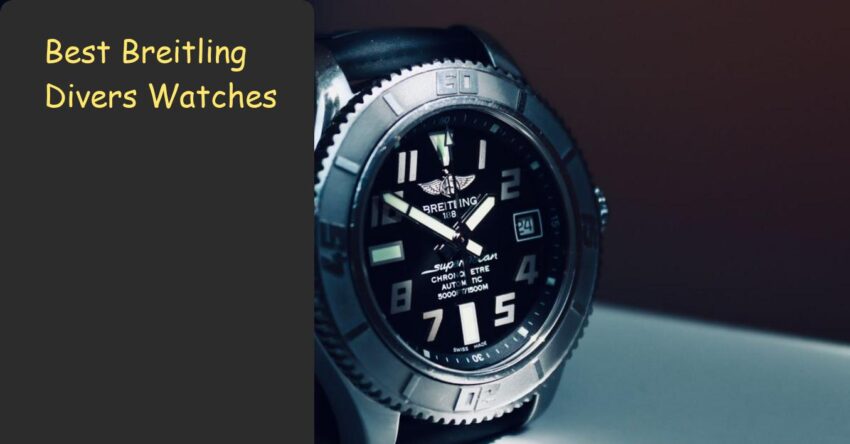
Introduction: Evaluating Breitling’s Position in the Luxury Dive Hierarchy
Dive watches sit at the intersection of precision engineering and bold design. They are the ultimate test of a watchmaker’s ability to balance form with function. While Breitling is best known for its aviation heritage, the brand’s diving story began in 1957 with the original Superocean.
The Short Answer: Breitling consistently ranks in the upper mid-tier of luxury dive watches. Most collectors place it at #4 or #5 in the overall hierarchy. It sits behind the ‘Big Three’ — Rolex, Omega, and Blancpain. It competes directly with Tudor and Panerai. And it stands well above entry-level luxury brands like Oris and Longines.
This position matters more than a simple number. It tells you what kind of value you are getting. Are you paying for brand cachet, technical specs, or both? A detailed comparison of Breitling vs Rolex in prestige reveals that brand perception does not always match raw capability.
Key Comparison Point: Consider the Breitling Superocean Automatic 44. It offers 1,000m water resistance. That is more than three times the Rolex Submariner’s 300m rating. This gap proves that technical specifications and brand prestige do not always move in lockstep. A higher depth rating does not guarantee a higher rank. That is the fascinating tension this article will unpack.
To understand Breitling’s true position, we must first look at what makes a dive watch tick — the standards, the ratings, and the priorities that separate a true tool from a lifestyle piece.
Understanding Dive Watch Standards: The Technical Benchmark
To answer the question of where Breitling ranks in watches for divers, we first need objective criteria. Brand reputation alone does not determine a watch’s true diving capability. The industry uses specific benchmarks to separate genuine tool watches from fashion-inspired pieces.
Three key factors define a serious dive watch: international certification standards, accurate water resistance ratings, and the real-world needs of professional divers versus collectors. Understanding these benchmarks helps you see why Breitling sits where it does in the luxury dive watch hierarchy. Let us start with the most authoritative measure of all — official ISO 6425 certification.
ISO 6425 Certification: The Gold Standard
Not every water-resistant watch qualifies as a true diver’s watch. The International Organization for Standardization (ISO 6425:2018) sets the benchmark. This standard defines the mandatory requirements for any watch marketed as a “diver’s watch.” Brands that meet these criteria earn real credibility in the diving community.
Legibility is non-negotiable underwater. The standard requires luminescent markers to remain visible at 25 cm in total darkness. This ensures you can read your watch even in murky depths.
The bezel must be unidirectional. This means it only rotates counterclockwise. If bumped, it can only show a shorter dive time—never a longer one. This safety feature prevents accidental decompression errors.
Durability covers three key threats. The watch must resist magnetism (per ISO 764), withstand shocks (per ISO 1413), and survive saline corrosion. These tests simulate real ocean conditions.
Integrity focuses on the crown and stem. These parts must remain secure under pressure. A failure here could flood the watch instantly. Breitling’s dive watches, like the Superocean series, undergo rigorous testing to meet or exceed these ISO standards.
With the technical benchmark established, let’s now examine how water resistance ratings work in practice.

Decoding Water Resistance Ratings
Water resistance ratings are one of the most misunderstood specs in the dive watch world. According to WatchGecko’s guide, these numbers do not always mean what buyers think they mean. A rating of 100m (10 ATM) is suitable for swimming and snorkeling, but it is not enough for scuba diving. Many buyers assume a 100m rating means deep diving — it does not.
200m (20 ATM) is the real minimum threshold for serious recreational diving. Any watch below this rating should not be trusted for repeated underwater use. For professional or saturation diving, you need 300m (30 ATM) or more. At that level, the watch can handle extended time at depth and repeated pressure cycles.
Ratings of 1,000m or higher fall into a different category entirely. These are engineering overkill — statements of brand prowess rather than practical necessity. When you look at where Breitling fits with its Superocean Automatic reaching 1,000m, you start to see a pattern. Technical bragging rights matter to enthusiasts, even when professional divers would never need that much depth. This distinction between what professionals need and what collectors want is exactly what we will explore next.
Professional vs. Enthusiast Priorities
Not every dive watch buyer uses it underwater. This creates a split between what professionals need and what collectors want.
What professionals look for: A survey by Fratello Watches reveals that working divers focus on practical details. They want a watch that fits comfortably over a thick wetsuit. They value titanium for its light weight and resistance to saltwater corrosion. They also demand an anti-reflective crystal that stays readable under bright tropical sun.
What enthusiasts prioritize: Collectors care about different things. They gravitate toward brand story, design heritage, and how a watch looks on the wrist. Resale value often matters more than depth rating. A 300m diver that holds 80% of its value beats a 1,000m diver that drops 40% — at least from an investment perspective.
This tension explains why brands like Breitling offer two Superocean lines. The Automatic series (1,000m) targets the tool-watch purist. The Heritage series (200m) caters to the style-conscious enthusiast. Both are excellent dive watches, but they serve very different buyers.
Understanding these two mindsets helps answer the question “where does Breitling rank in watches for divers.” The brand sits in a unique sweet spot — it delivers true professional specs while maintaining enough design flair to attract serious collectors. Now let’s examine exactly what Breitling brings to the table in its current dive watch lineup.

Breitling’s Dive Watch Credentials: Power and Performance
Breitling divides its dive-ready offerings into three distinct families. Each line targets a different type of underwater enthusiast. The Superocean series sits at the core of Breitling’s diving identity. It offers everything from extreme-depth tool watches to vintage-inspired lifestyle models.
Beyond the Superocean, the Avenger and Chronomat collections bring significant water resistance to tactical and pilot-focused designs. These lines prove that Breitling’s engineering standards apply across categories. The brand also backs its performance claims with robust movements and COSC certification. For a deeper look at how Breitling builds its watches for daily durability, our guide on whether Breitling watches are reliable for daily use breaks down the construction details. Let us explore each family in detail.
The Superocean Series: The Primary Contender
When asking where does Breitling rank in watches for divers, the Superocean is the answer that carries the most weight. This collection serves as Breitling’s true dive watch flagship, offering the highest depth ratings and most specialized features. The line splits into two main branches: the modern tool-oriented Superocean Automatic and the retro-styled Superocean Heritage. Each appeals to a different personality, but both uphold Breitling’s reputation as a serious contender in the luxury dive watch rankings. For buyers comparing best diving watch brands, understanding this split is essential before choosing a model.
Superocean Automatic: The High-Performance Tool
The Superocean Automatic is the purest tool watch in Breitling’s dive catalog. The 44mm model delivers a massive 1,000m water resistance rating. That far exceeds what most divers will ever need. But it makes a clear statement about engineering confidence.
Breitling offers this model in bold colorways like yellow and turquoise. These high-contrast dials improve legibility in murky underwater conditions. A cambered sapphire crystal with double anti-reflective coating ensures minimal glare. This combination of specs makes the Superocean Automatic a legitimate contender for serious diving work. It holds its own against models from Tier 1 brands at a lower price point. And yet, the vintage-inspired Superocean Heritage takes a different approach — one that leans more on style than raw depth.
Superocean Heritage: The Vintage-Inspired Lifestyle Diver
While the Superocean Automatic pushes limits with its 1,000m rating, the Heritage line takes a different path. It draws inspiration from Breitling’s original 1957 dive watch. The design features retro arrow hands and a distinct knurled bezel. These elements create a classic, timeless aesthetic.
Water resistance sits at 200 meters. That is plenty for recreational scuba diving. But it is far below the Automatic’s extreme depth rating. This difference shows the Heritage line prioritizes style over specs.
As noted by A Blog to Watch, this model focuses on aesthetics and everyday wearability. It is less about depth records and more about vintage charm. The Superocean Heritage suits divers who want a retro look backed by modern reliability.
Breitling’s dive lineup continues next with tactical versatility. The Avenger and Chronomat bridge the gap between pilot watches and capable water tools.

The Avenger and Chronomat: Tactical Versatility
Breitling’s dive credentials extend beyond the Superocean family. The Avenger and Chronomat lines also deliver meaningful water capability. These watches serve dual purposes for enthusiasts who want both aviation style and underwater confidence.
The Avenger series is built for extreme conditions. It features a ratcheted bezel designed for gloved operation in tactical environments. While the modern Avenger lineup offers solid depth ratings, the discontinued Avenger Seawolf pushed boundaries with an astonishing 3,000m water resistance. That places it among the deepest diving watches ever produced by any brand. For 2025 buyers, current Avenger models still provide robust water protection suitable for serious recreational diving.
The Chronomat B01 42 takes a different approach. It offers 200m water resistance, which exceeds many dedicated dive watches. Despite being a pilot-focused chronograph, it handles swimming, snorkeling, and surface water activities with ease. This versatility makes the Chronomat an excellent choice for those who want one watch for multiple environments. If you are wondering are breitling watches reliable for daily use, models like the Chronomat prove that Breitling builds water-ready durability into almost every collection.
These models show that Breitling’s engineering philosophy extends across all lines. The same attention to seals, crystals, and case construction appears throughout the catalog. This consistency matters when evaluating are breitling vs tag heuer in quality comparisons. Now let us look at what powers these watches. The next section explores the movements and materials that give Breitling its technical edge.
Movement and Material Science
Beyond depth ratings and case design, what lives inside the watch truly defines its capabilities. Breitling equips its dive watches with robust, proven movements that power long dives and daily wear alike.
The B20 Movement: Built for endurance. Many Superocean models feature the B20 caliber, which is derived from Tudor’s MT5612 movement. This automatic workhorse provides a 70-hour power reserve, meaning you can set it down on Friday and pick it up Monday without rewinding. The partnership with Tudor (a sister brand under the Richemont/Partinari alliance) gives Breitling access to a battle-tested architecture known for reliability. For context on how this compares to other luxury options, our analysis on are Breitling watches reliable for daily use covers real-world wear patterns.
COSC Certification: Measured accuracy you can trust. Every single Breitling movement undergoes independent testing by the COSC, the Swiss Official Chronometer Testing Institute. This certifies the watch to run within -4 to +6 seconds per day. Not every luxury brand submits all its watches for this certification. Breitling puts every piece through the process, which adds a layer of quality assurance that matters underwater.
Warranty coverage: Above industry standard. Breitling backs its dive watches with a 5-year warranty that now exceeds the traditional 2-year coverage offered by most competitors. This longer guarantee signals confidence in both the movement and the construction. When you are investing in a piece meant to withstand the ocean’s pressure, that extra protection offers real peace of mind. This combination of movement pedigree, certified accuracy, and extended warranty helps explain where Breitling sits in the broader luxury dive watch hierarchy.

The Definitive Luxury Dive Watch Hierarchy
The watch world loves a ranking. And when enthusiasts ask where does Breitling rank in watches for divers, the answer depends on which metrics matter most. Is it depth rating? Brand prestige? Resale value? Each tier in the hierarchy offers a different mix of these qualities.
As we noted in the introduction, Breitling sits comfortably in the #4 or #5 position overall. It ranks behind the legendary “Big Three” dive watch makers. But it competes neck-and-neck with Tudor and Panerai for the next spot. To understand why, we need to break down the tiers clearly.
The table below shows the broad categories. But the real story is in the details. For a deeper look at how Breitling compares to Rolex specifically regarding prestige, see our Breitling vs Rolex prestige guide. And if you are curious about long-term value, our ROI comparison between these brands offers useful data.
Let us walk through each tier. We will examine where Breitling excels and where it falls short against its rivals.
Tier 1: The Elite (Rolex, Omega, Blancpain)
At the top of the dive watch hierarchy sits a small group of brands that define the category. These are the names that command the highest respect, the strongest resale values, and the most passionate followings.
The Rolex Submariner is the undisputed benchmark. It is the watch every other dive watch is compared against. Rolex equips the Submariner with proprietary Chromalight lume for exceptional underwater legibility and a Parachrom hairspring that resists magnetism and shock. Its cultural status is unmatched, and its resale performance is legendary. If you are curious about how Breitling stacks up against this icon in terms of prestige, our guide on Are Breitling Watches as Good as Rolex in Prestige? explores that question in depth.
The Omega Seamaster takes a different approach. Omega focuses on cutting-edge movement technology. Its METAS certification guarantees resistance to magnetic fields of up to 15,000 gauss. The Co-Axial escapement reduces friction and extends service intervals. This makes the Seamaster a serious contender for buyers who prioritize technical innovation over brand name alone.
The Blancpain Fifty Fathoms is the historical innovator of the group. Released in 1953, it was the first modern dive watch. Blancpain operates at a higher tier of luxury finishing than Rolex or Omega. Its prestige among collectors is enormous, even if its mainstream recognition is lower.
Where does Breitling rank against these elites? Breitling matches them on raw depth specs — the Superocean hits 1,000m, far exceeding the Submariner’s 300m. It also offers COSC-certified accuracy on every model. But Breitling falls short in two key areas. It lacks a proprietary high-tech certification like METAS. And its resale value does not hold as steadily. This places Breitling one tier below these giants. However, that gap narrows significantly when you look at the next tier of competitors.

Tier 2: The Upper Mid-Tier (Breitling, Tudor, Panerai)
Below the elite tier sits a fiercely competitive group of luxury dive watch brands. Here, Breitling faces its closest rivals: Tudor and Panerai. This is the battleground where many enthusiasts make their final buying decision.
The Tudor Pelagos is widely regarded as the best value tool watch in diving. It uses a full titanium case and bracelet for lightweight, corrosion-resistant durability. The Pelagos offers 500m water resistance, a helium escape valve, and a reliable Tudor manufacture movement. It benefits from Rolex-adjacent quality control at a significantly lower price. This makes it a formidable competitor for anyone asking where does Breitling rank in watches for divers on a budget.
The Panerai Submersible brings a completely different flavor to the category. Its bold Italian Navy heritage dates back to the 1930s. The iconic crown guard device and cushion-shaped case are instantly recognizable. Panerai focuses on presence and design character over extreme technical specs. Its 300m water resistance is adequate for most divers, but the real draw is its distinctive look.
So where does Breitling fit? It effectively ties for the lead in this tier. Breitling offers a longer brand heritage than Tudor, with roots stretching back to 1884. It also provides far more design diversity than Panerai. The lineup ranges from the colorful, modern Superocean to the retro-styled Superocean Heritage. In terms of raw dive specs, Breitling often exceeds both rivals with its 1,000m-rated flagship models. This makes it a strong choice for buyers who want both heritage and over-engineered capability. It also competes well with other luxury brands when you evaluate how Breitling compares to competitors like Tag Heuer in overall quality.
However, the story does not end here. Below these upper-mid brands lies a tier of strong value contenders. Let us examine how Breitling justifies its premium when placed against brands like Oris, Seiko, and Longines.
Tier 3: Value Contenders (Oris, Seiko, Longines)
Below Breitling sits a group of brands that deliver excellent dive watches at lower price points. Each offers something unique for budget-conscious enthusiasts.
Oris Aquis stands out for its independent watchmaking character. Prices range from $1,500 to $2,500. The brand is not owned by a large luxury group. This independence allows Oris to focus on finishing details often found in pricier watches. The Aquis line features a unique crown-locking system and sharp dial execution.
Seiko Prospex (MM300) is a cult favorite among diving purists. Its monocoque case construction means the movement is inserted from the front. This design eliminates the need for a traditional case back, improving water resistance. The MM300 has a dedicated following that rivals many Swiss brands.
Longines HydroConquest is the entry point for Swiss luxury dive watches. It offers reliable ETA-based movements and classic styling at accessible prices. For buyers who want a Swiss name without the premium of Breitling or Tudor, this is a solid starting point.
How does Breitling compare to this tier? It justifies its higher price through superior finishing, guaranteed COSC accuracy, and a longer warranty period. Many buyers find that Breitling watches are worth it for collectors when long-term quality and brand heritage matter. Moving up into the upper mid-tier means trading raw value for more stringent certification and bolder design language. These practical differences matter when you start evaluating real-world ownership in the next section.

Practical Implications for Potential Buyers
Choosing Breitling involves balancing technical prowess against market realities. The brand delivers impressive depth ratings and build quality. But buyers must also consider depreciation and brand cachet compared to Tier 1 rivals.
Performance vs. Resale Value
Data from Chrono24 shows Breitling sees about -35% depreciation over five years. Rolex holds much better at roughly -15%, while Omega sits around -25% to -30%. This makes Breitling a weaker “investment” in pure resale terms. However, that same depreciation turns into a major advantage on the pre-owned market. You can often find a nearly new Superocean for thousands less than a comparable Submariner.
Does this mean you should skip Breitling if you care about value? Not necessarily. A 2026 analysis on whether Breitling watches are worth it for collectors breaks down how buying smartly — especially on the secondary market — can change the math entirely. For buyers who plan to wear their watch daily, the lower upfront risk of loss is a real benefit.
Summary: When to Choose Breitling
Breitling makes sense if you want a watch that feels truly indestructible. The tactile bezel action and heavy-duty case inspire confidence. If a depth rating of 1,000m or more appeals to you as an engineering statement, few brands deliver it at Breitling’s price point. The Superocean also helps you stand out from the ubiquitous Submariner aesthetic. You get bold colors, a distinct design language, and a story rooted in aviation and diving heritage. Finally, the 5-year warranty and guaranteed COSC accuracy give peace of mind that competitors like Tudor or Oris cannot always match at similar price levels.
For a deeper comparison on prestige and long-term satisfaction, our guide on Breitling vs Rolex prestige covers the intangibles that affect buying decisions. If you are still wondering where does Breitling rank in watches for divers compared to budget alternatives, the next section answers the most common questions from buyers like you.
Performance vs. Resale Value
Owning a dive watch is about more than depth ratings. For many buyers, long-term value matters just as much as water resistance. This is where Breitling’s position gets interesting.
Market data from Chrono24 reveals a clear depreciation pattern. Breitling watches lose about 35% of their value over five years. That is steeper than Omega’s 25% to 30% drop. Rolex leads the pack with just 15% depreciation in the same period.
Does that make Breitling a bad purchase? Not at all. It simply shifts the value equation. Remember the 1,000m water resistance we discussed earlier? You get that technical overkill for a much lower entry price on the secondhand market. That is a strong deal for someone who actually dives.
If you want to learn more about whether Breitling watches increase in value after discontinuation, we have a dedicated guide on that topic.
For the buyer who prioritizes specs-per-dollar over investment potential, Breitling makes rational sense. You buy it to wear it, not to flip it. The pre-owned market is especially attractive here. A used Superocean gives you COSC accuracy, a 5-year warranty, and industry-leading depth ratings at a fraction of retail.
This practical trade-off sets the stage for a simple question: when should you choose Breitling over the competition? Let’s break that down next.

Summary: When to Choose Breitling
After weighing the competitive landscape, here is the bottom line. Breitling makes the most sense for specific types of buyers.
If you want a watch that feels indestructible and tactile, Breitling delivers. The Superocean’s chunky case and solid bracelet give it a robust, tool-like feel. It is built to be worn hard, not just displayed.
If you want a depth rating that serves as an engineering statement, look no further. The 1,000m+ rating on the Superocean Automatic is genuine over-engineering. It tells the world you value substance over hype. For those curious about how this compares to other brands, our guide on Breitling vs Tag Heuer in quality explores similar technical contrasts.
If you want to stand out from the ubiquitous Submariner aesthetic, Breitling is a smart pick. Its bold colorways and distinctive bezel design are instantly recognizable. You get a unique look without sacrificing performance.
If you value a 5-year warranty and guaranteed COSC accuracy, Breitling checks both boxes. Every movement is certified for precision. That peace of mind matters when you rely on your watch underwater. For more on long-term value, check out our analysis of whether Breitling watches increase in value after discontinuation.
Still wondering if Breitling fits your needs? The next section answers common questions about its dive watch credentials.
People Also Ask (FAQ)
To help you make an informed decision, here are answers to the most common questions about Breitling’s dive watch credentials.
How does Breitling compare to Rolex for diving?
Technically, Breitling often matches or exceeds the Rolex Submariner. The Superocean Automatic offers 1,000m water resistance, compared to the Submariner’s 300m. Both brands meet ISO 6425 standards. However, Rolex leads in brand prestige and resale value. Rolex also uses proprietary tech like the Parachrom hairspring. For a deeper look at how these brands compare overall, check out our guide on whether Breitling watches match Rolex in prestige.
Is Breitling better than Tudor for dive watches?
These two brands are very close competitors. Tudor offers titanium construction and Rolex-adjacent quality control at a lower price. Breitling counters with deeper heritage dating back to 1884, more colorful designs, and higher depth ratings on flagship models. If you want to know more about Breitling’s history and market position, read about when Breitling was established as a luxury brand. The Tudor Pelagos is the better tool watch for pure value. The Breitling Superocean is the better choice if you want character and bold aesthetics.
Do Breitling dive watches hold their value?
Generally, no. Breitling watches depreciate faster than Rolex or Omega. This makes them weaker as financial investments. However, this also makes them excellent buys on the secondary market. You can often pick up a pre-owned Superocean at a significant discount. For more details on value retention, see our analysis of whether Breitling watches increase in value after discontinuation. The bottom line is simple: buy Breitling to wear, not to flip.
Is the Superocean a ‘real’ dive watch?
Yes, without question. All Superocean models meet or exceed ISO 6425 standards. They feature unidirectional bezels, luminescent markers, and screw-down crowns. The enthusiast community recognizes them as high-performance tool watches. The 1,000m depth rating on the Automatic 44 is genuine engineering, not marketing hype. A guide from WatchGecko confirms that ratings above 300m are suitable for professional diving. The Superocean is a true dive watch through and through.
How does Breitling compare to Rolex for diving?
This is the most common comparison in the dive watch world. On paper, Breitling often beats Rolex in raw specifications. The Superocean Automatic offers 1,000m water resistance, while the Submariner stops at 300m. That is a significant gap for anyone who values depth ratings as proof of engineering.
However, specs tell only part of the story. Rolex dominates in three areas where Breitling cannot compete: brand prestige, resale value, and proprietary technology. The Submariner’s Parachrom hairspring offers exceptional resistance to shocks and magnetism. According to Chrono24 market data, Rolex retains roughly 85% of its value over five years, while Breitling drops to about 65%.
What does this mean for a buyer? If you care about investment potential and status, Rolex wins. If you want a technically superior tool watch at a lower entry price, Breitling is the smarter choice. The Superocean also gives you bolder colors and a more tactile feel. You can dive deeper with a Breitling, but you will lose more money doing it.
For a deeper look at how these brands compare in prestige and daily wear, read our guide on Breitling vs Rolex prestige. We also cover resale strategy differences in another post.
Is Breitling better than Tudor for dive watches?
The Tudor vs Breitling debate has no single winner. Both brands sit firmly in the upper mid-tier of the luxury dive watch hierarchy, as outlined earlier. They compete directly, but each takes a very different approach to design and engineering.
Tudor is known for titanium construction and quality control borrowed from its parent company, Rolex. The Tudor Pelagos is a lightweight, matte-finish tool watch built for serious diving. It offers excellent value and a rugged, no-nonsense aesthetic.
Breitling counters with deeper brand heritage dating back to 1884, as detailed in this guide on when Breitling was established. It also offers bolder, more colorful dial options. On flagship models like the Superocean, Breitling delivers significantly higher depth ratings — often 1,000m compared to Tudor’s 500m.
So which is better? It depends on your priorities. Tudor wins on pure tool-watch minimalism and Rolex-adjacent finishing. Breitling wins on heritage, visual personality, and extreme depth specs.
That said, value retention is another factor entirely — and it often separates these two brands on the secondary market.
Do Breitling dive watches hold their value?
The short answer is no. As touched on in the previous section, data from Chrono24 tracking market trends confirms that Breitling watches depreciate faster than top-tier peers. Rolex and Omega consistently command stronger resale figures.
But this is not necessarily bad news for buyers. A faster depreciation curve makes Breitling an exceptional value on the pre-owned market. You can often find a well-maintained Superocean or Avenger at a fraction of its original retail price.
For collectors focused on investment potential, Breitling is a weaker choice. If your goal is financial appreciation, a Rolex Submariner or Omega Seamaster offers better long-term value. However, if you plan to wear and enjoy your dive watch, Breitling’s lower holding cost works in your favor.
For a deeper look at value retention trends, check out our full guide on whether Breitling watches increase in value after discontinuation. Next, let’s settle another common question: Is the Superocean actually a real dive watch?
Is the Superocean a ‘real’ dive watch?
Yes, absolutely. Every Superocean model meets or exceeds the strict ISO 6425 standards that define a genuine diver’s watch. This certification covers legibility in total darkness, unidirectional bezel function, and water resistance integrity under pressure. The enthusiast community widely recognizes the Superocean as a high-performance tool watch, not just a lifestyle accessory. For those wondering about everyday reliability, our detailed analysis on how Breitling watches hold up for daily use confirms that these watches are built to perform — both above and below the surface.
The Final Verdict
So where does Breitling rank in watches for divers? After comparing specs, heritage, and real-world performance, the answer is clear. Breitling occupies a definitive #4 or #5 rank in the luxury dive watch world. It sits behind the elite trio of Rolex, Omega, and Blancpain but stands shoulder-to-shoulder with Tudor and Panerai.
What does that ranking mean for you? It depends on what you value most. If you chase prestige and strong resale value, a Rolex Submariner discussion in our comparison guide might be worth exploring. But if you want a watch that feels engineered for real use, Breitling delivers. It may not have the cultural ubiquity of the Submariner. However, it offers a distinct, high-performance alternative for those who value engineering substance and bold design.
The verdict is straightforward. Breitling is an upper mid-tier powerhouse that delivers exceptional value. This is especially true for the buyer who plans to wear the watch for its intended purpose rather than keep it in a safe for resale. As we covered in our analysis on Breitling vs. Rolex ROI, Breitling’s faster depreciation makes it a smart buy on the pre-owned market. You get more watch for your money — deeper depth ratings, COSC certification, and a 5-year warranty — all without paying for the brand tax that Rolex commands.
For collectors wondering if Breitling watches increase in value after discontinuation, the answer is generally no. But that misses the point. Breitling makes tools, not investment pieces. And for those who actually dive, or simply appreciate rugged engineering, that distinction matters. Ultimately, Breitling earns its rank not through hype, but through honest performance. And in a market overflowing with safe choices, that honesty is refreshing.
